
Get You Updated on Playground Equipment News.
You're likely looking for a quote when you reading this article. But if all you do for your business is comparing a sheet of "Price per Square Meter,"you may get a failure of your playground. In my last 10 years as a experienced manufacturer, I have seen hundreds of indoor parks open,and many of them closed within 18 months because of various flaws. The difference between the survivors and loser is the view of buying a playground. The man who invest in a risk-managed asset finally survived in such a industry.
As the top strategist at a top-tier indoor play area suppliers,stripping away the marketing lies about this industry is the aim of writting this article. This is the "blood and guts" breakdown of what indoor playground equipment cost actually looks like when you fully take the reality of global trade, fire rules, and high-energy toddlers into consideration.
I am aksed with this question from my customers every day: "What is your average price per square meter?I want to take your answer as a reference."
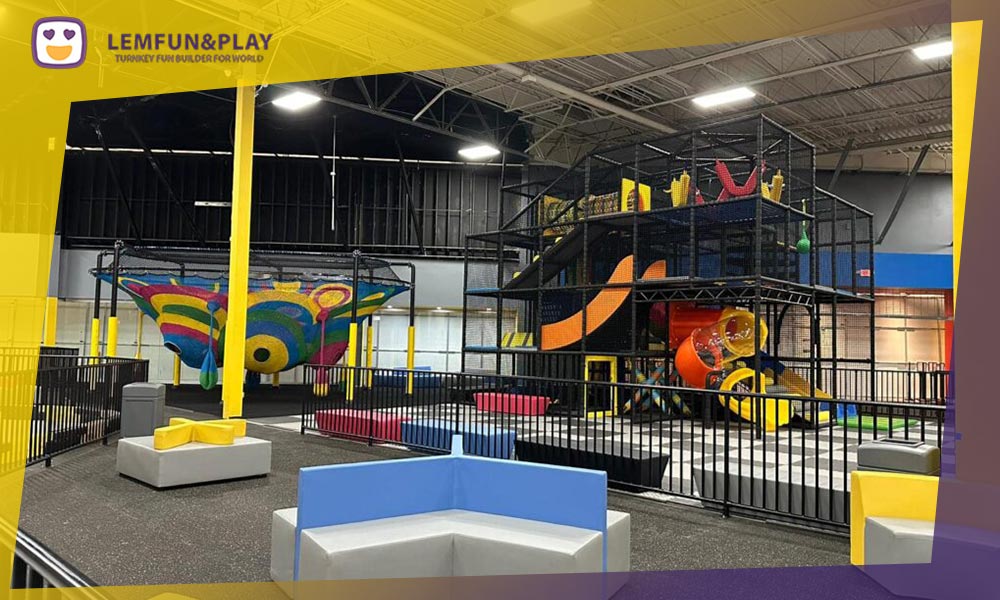
But my answer is always the same: Which market are you trying to conquer? In my team, we divide production into two independent "battle plans."Listen, if a supplier gives you a fixed price without asking about the foot traffic or location of your market, they are just selling you a box of playground parts, not a business solution.
The Community Model (about $80/sqm)
These kind of playground are built for local neighborhoods where foot traffic is steady but not extreme. So we use standard durability components like reliable galvanized steel and Fire-Resistant wooden platform to meet this situation. It's perfect for a daycare or a local community hub where you expect 50-100 kids each day.
The Flagship Custom (about $120/sqm)
These are for top 1 shopping malls with 2,000 kids a weekend. Accordingly,we will use 1.5mm wall thickness on every steel pipe, triple-layered reinforced netting, and premium fire-retardant PVC wraps.
All the time, pricing is about durability matching. Buying an $80/sqm set for a high-traffic mall is a suicide mission; the maintenance and replacement costs will eat your profits in six months. You aren't just buying equipment; you are buying "Up-time." Every hour your slide is taped off for repairs is money leaking out of your pocket.
2. The "1.5x Rule": Why Your Equipment Budget is a TrapMost rookies think the equipment quote is their total startup cost. Wrong. I once worked with a client in New York who made a classic mistake. He paid his deposit for a massive, beautiful set, but he didn't account for the volatility of the global shipping market. Mid-production, ocean freight and import duties spiked due to trade tensions. He didn't have the liquidity to clear the port.
His cargo sat in my warehouse for 90 days while he scrambled for a loan. His grand opening was delayed, his staff quit, and he lost three months of "peak season" revenue.
The Hard Truth: For a 20,000 sq. ft. park, your indoor playground for sale might cost $200,000 to $240,000. But do not sign a lease unless you have 1.5 times that amount in cash. That 50% buffer is your shield against freight spikes, customs headaches, local site prep, and the inevitable "surprise" fees from your local city council.
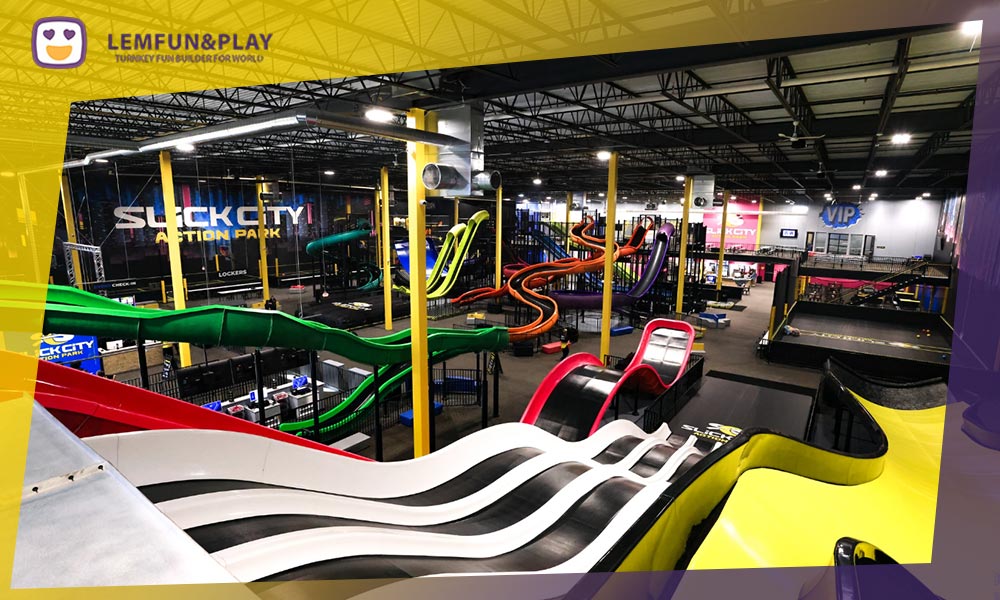
The most expensive equipment is the stuff that stops moving. In actual operation, the hardware that drives your ROI also carries the highest risk. Based on a decade of maintenance data, the "Profit Killers" are always the motorized units.
If you are looking to cut costs, do not cut them here. The following items are high-maintenance "divas":
Electric Motorized Gear: Rotating palms, electric carousels, and moving swings.
High-Tech Integration: VR stations, interactive projectors, and digital scoreboards.
Sanitation Tech: High-end ball pool cleaning machines.
These units require precision engineering. If you buy a "budget" version of a motorized unit to save $500 today, you will spend $2,000 six months from now on air-freighting replacement motors and paying for specialized technician downtime. In this business, quality is a form of insurance. Buy quality once, or pay for the mistake every month of your operational life.
4. Fire Codes and the 18-Inch Death Sentence
I've seen grown men cry when the Fire Marshal walks into their "finished" park and tells them they can't open. This isn't a joke; it's a legal wall. In the United States (ASTM standards) and Europe (EN1176), compliance is non-negotiable.
I recently had a client in New Mexico who was ready to sign a lease on a "cheap" warehouse with a 10-foot ceiling. I stopped him just in time.
Why? Because you must maintain a minimum 18-inch safety gap between the top of your equipment and the fire sprinkler heads. If your ceiling is too low, your equipment becomes a fire hazard. You would be forced to either tear down the top level of your play structure—killing your capacity—or spend $50,000 relocating the building's entire fire suppression system.
If your manufacturer doesn't ask for your ceiling height and sprinkler map before they design, they aren't your partners—they're just order-takers. We demand these details because we refuse to let our clients fail.
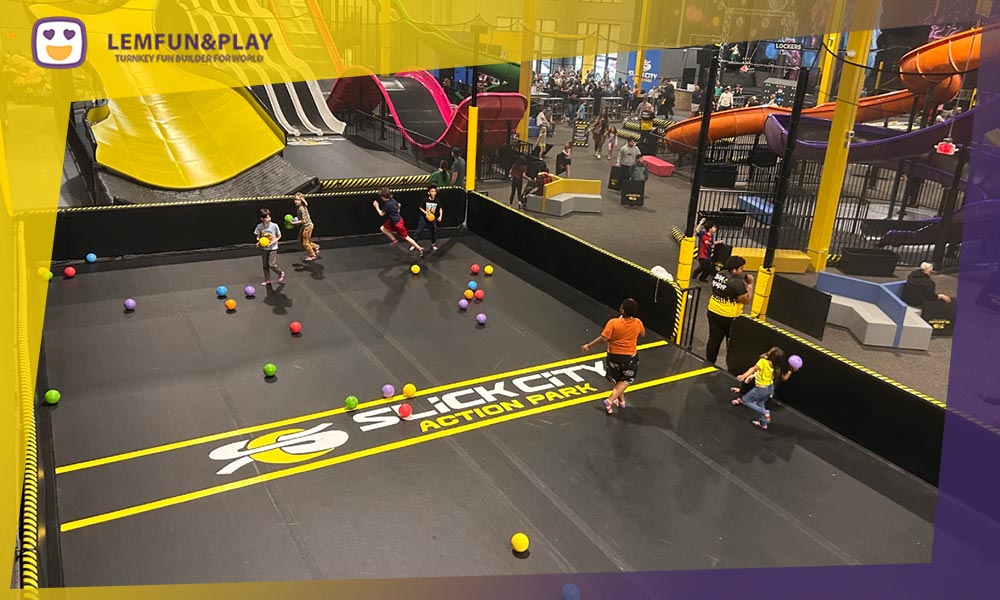
Newbies think "more equipment = more money." They try to cram every square inch with plastic. This is a mistake. Overcrowding kills your "Play Density" and ruins the customer experience. Parents want a place to sit, and kids need "runway" space to move between attractions.
We design for a specific balance to ensure your park is a money-printing machine:
60% Core Attractions: The "anchor" maze, the ball pits, the slides. This is why they come.
40% Revenue Multipliers: This is where the profit is actually made.
In our most successful Florida projects, we dedicated 40% of the footprint to Party Rooms, a professional Cafe area, and Arcade zones. You don't get rich on the $15 entry ticket; that just covers your rent and utilities. You get rich on the $300 birthday package, the $5 lattes, and the $2 arcade swipes. We design your layout to "funnel" parents toward the cafe and kids toward the high-margin secondary attractions.
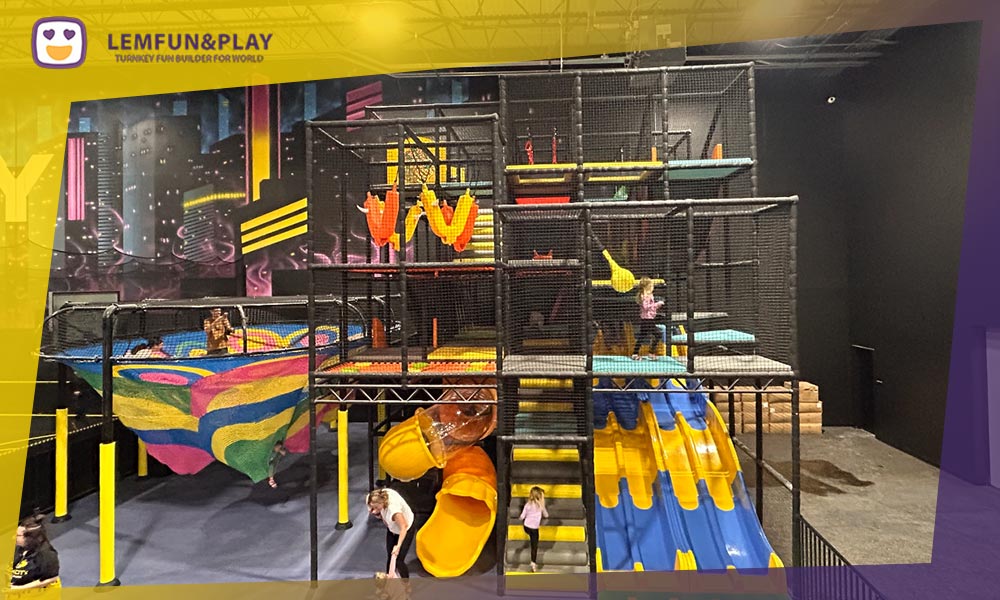
Let's talk real ROI. Anyone promising a 3-month return is lying to you. In a mid-tier location, if your equipment is durable and your marketing is aggressive, your break-even point (where cumulative revenue covers your initial CAPEX and monthly OPEX) should be 6 to 12 months. If your business plan shows a 24-month break-even, your rent is too high or your equipment mix is too "passive." You need high-turnover attractions—like drop slides or ninja courses—to keep the "churn" high and the cash flow accelerating. We provide our clients with a detailed ROI calculator because we want you to see the numbers before you saw the wood.
7. Residual Value and the "5-Year Refresh"
Investors often ask, "What can I sell this for in 5 years?"
The answer is: Next to nothing. In 5 years, the foam is worn, the netting is stretched, and the design trends have changed. You aren't buying a piece of real estate; you're buying a revenue generator. While our galvanized steel frames are built to last 10 years, we tell our clients to plan for a "Soft Refresh" every 2-3 years.
Replace the ball pit balls, swap out the PVC padding colors, and update the interactive games. This keeps the experience "new" for the local community and prevents your park from looking like a relic of the past.
8. The "30% Cheaper" Suicide Note
When a competitor offers you a price 30% lower than ours, they aren't "more efficient" or "kinder." They are gambling with your insurance and your reputation.
Steel Pipe: We use 1.5mm wall thickness. They use 1.0mm. It feels fine during the first week. By the first year, it bends under the weight of a 200lb parent trying to retrieve a child.
PVC Wraps: Ours are certified fire-retardant. Theirs are often standard industrial plastic. One inspection failure, and your business is closed for "safety violations" before you even open.
Ball Pit Density: Our balls are 5g heavy-duty LDPE. Theirs are 3g thin shells that crush like eggshells, leaving your pit filled with sharp plastic shards.
Saving 30% on the purchase price can cost you 100% of your business if a child gets hurt or a fire inspector pulls your license.
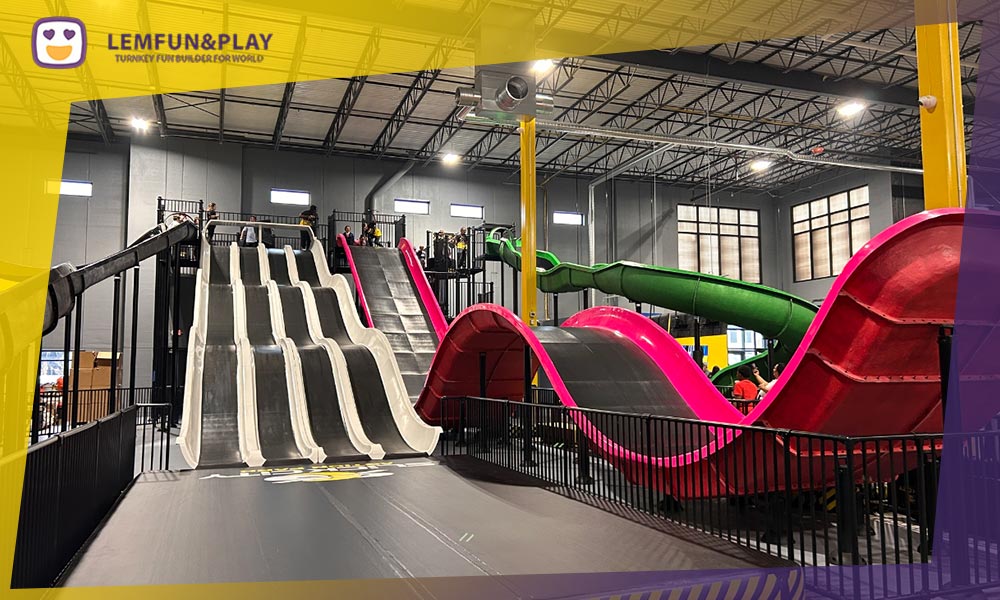
If you want the highest ROI per square inch in 2026, you must install a Ninja Warrior Course.
10. The Veteran's Final Recommendation: Quality Over Scale
If you have a limited budget, shrink the venue, don't shrink the quality. A 5,000 sq. ft. park with "Flagship" quality equipment, a great cafe, and perfect lighting will out-earn a 10,000 sq. ft. "warehouse" filled with "Budget" junk every single time. Parents pay for cleanliness and safety. If your equipment looks cheap, your brand looks cheap. And cheap brands don't survive the 12-month mark.
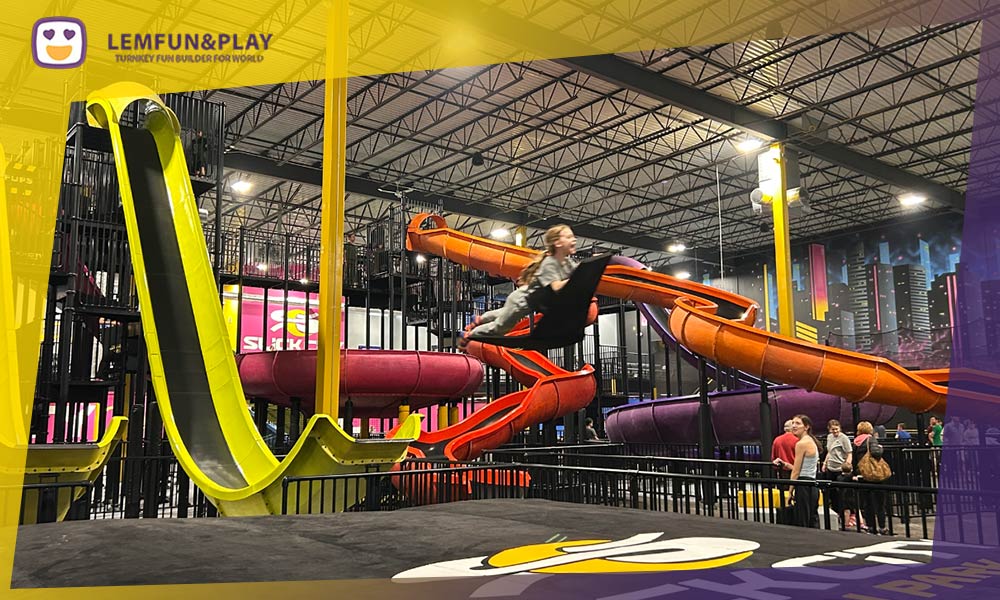
Q: Can I achieve a full ROI in under 6 months in the current economy?
Only if you dominate the "Premium Party" niche. Yes, it is possible, but you must shift your mindset from "ticket sales" to "event hosting."
My Experience: I had a client in Texas who hit his break-even in 163 days. He didn't focus on walk-in traffic. Instead, he built four "VIP Birthday Suites" and priced them at $600 per 2-hour slot. His equipment was the "hook," but his service was the "engine." He stayed fully booked for six months straight. If you want a fast ROI, you need a high-margin service layer on top of your equipment.
Q: Is "Made in China" equipment a liability for Western safety inspections?
No, provided you choose a manufacturer that builds to ASTM (US) or EN1176 (EU) standards. Safety is a choice, not a geography.
My Experience: We have passed hundreds of inspections in some of the strictest jurisdictions in the world, including California and Germany. The "risk" only exists when you buy from "no-name" trading companies who don't understand the difference between a 2-inch and a 4-inch gap in the safety netting. We provide the certification paperwork before the equipment even leaves the factory floor.
Q: Do I really need to pay for a professional installation team?
Yes. DIY installation is the fastest way to void your insurance and kill your business.
My Experience: A client in the UK tried to save $10,000 by using local general contractors. They installed the main drop slide at the wrong angle, creating a dangerous friction-burn hazard. When the inspector saw the "improvised" bolting on the frame, he shut the site down immediately. The client had to pay us to fly a team out, tear it down, and rebuild it correctly. He ended up paying 2.5x the original installation cost and missed his Christmas opening window.
Q: What is the most common reason indoor playgrounds fail in the first year?
Under-capitalization and poor location choice. It's rarely the equipment; it's the lack of "Runway" cash.
My Experience: Most failures I see happen because the owner spent 100% of their money on the equipment and the lease, leaving $0 for marketing or staff training. When the first month's revenue is slow (as it often is), they panic and cut corners on cleaning and maintenance. This creates a "death spiral" where the park looks dirty, parents stop coming, and the business dies. Follow my 1.5x rule to avoid this.
Q: How do I choose between a Trampoline Park and a Traditional Soft Play Area?
Look at your insurance premiums first. Trampoline parks have higher "Gravity Risk" and higher insurance costs.
My Experience: Trampoline parks are great for older kids, but the liability insurance in 2026 can be 3x higher than a traditional indoor playground. If you are a first-time investor, I recommend a "Hybrid" model: 70% soft play (low risk) and 30% trampoline/ninja elements (high attraction). This gives you the marketing "pop" without the astronomical insurance overhead.
Q: Can I negotiate the price of the equipment?
Yes, but only on the "Features," never on the "Safety." Negotiate the fluff, keep the bone.
My Experience: If a client needs to save $10,000, I don't thin out the steel pipes. I suggest removing one of the motorized units or switching to a simpler slide design. A good manufacturer will help you "Value Engineer" your project to fit your budget without compromising the structural integrity that protects the children and your legal liability.
Q: How much should I budget for annual maintenance?
Budget 3% to 5% of your initial equipment cost annually. Maintenance is cheaper than litigation.
My Experience: The owners who spend $5,000 a year on proactive maintenance (replacing nets, tightening bolts, deep cleaning) are the ones who are still in business 10 years later. The owners who wait for something to break before fixing it are the ones who eventually get hit with a lawsuit or a permanent closure order.
Q: Is the "Ninja Warrior" trend dying?
No, it is evolving. It has transitioned from a "fad" to a "staple" attraction.
My Experience: The "Ninja" element is now a standard expectation for kids over the age of 8. If you only have soft play for toddlers, you are cutting out 50% of the potential market. Even a small 3-obstacle ninja run can increase your "Average Age" of customer, which directly increases your revenue.
Q: How do I handle a "Bad" Fire Inspection?
Don't argue—collaborate. The inspector is the gatekeeper to your income.
My Experience: If an inspector finds a fault, I tell my clients to ask: "What is the specific standard we missed, and how can we exceed your expectation to fix it?" Usually, it's a small fix—adding a sign or trimming a piece of foam. If you treat them like the enemy, they will find 50 more "faults." If you treat them like a safety consultant, they will help you open faster.
Q: Why should I buy from Yommi instead of a local distributor?
Because you are cutting out the 40% "Middleman Tax" and getting direct engineering support. Buy from the source, or pay for the distributor's lifestyle.
My Experience: Local distributors rarely know the technical specifications of the steel or the chemical composition of the PVC. They are just salespeople. When you work with us, you are talking to the people who actually weld the steel and sew the pads. If something goes wrong, you have a direct line to the solution, not a "customer service" ticket in a distributor's office.


We use cookies to enhance your browsing experience, serve personalized ads or content, and analyze our traffic. By clicking "Accept All", you consent to our use of cookies.
